

Our modern world is a globalized trade network.
We're all linked to one another through commerce. The products and services we create often travel vast distances to reach end users, from table tops and bases, to vanilla and microprocessors. Different corners of the globe have specialized skills, and we all share the fruits of that labor. This is really only possible because of the trade network that has emerged after centuries of innovation and changes (and mistakes). Two of the biggest pieces of that puzzle are the shipping container and the pallet, the basic units of global trade. Without a secure and standardized way of moving goods and services, it’s doubtful that we would have access to the variety of products that we can find at local shops today. But where did these innovations come from, who made them, and how have they changed over time? Keep reading to find out!
Worldwide trade has existed for millennia.
As soon as we were able to sail to other continents we’ve been able to take advantage of different culture’s offerings and bring them back to sell to new audiences. For centuries there was little uniformity in how goods were transported. Giant ceramic jugs called amphora were popular for wine and oils, and construction materials were often transported on wooden skids, the predecessor to the modern pallet. Other goods were often transported in wooden barrels, baskets, or bags made from animal skins. Eventually these were replaced by glass bottles and wooden crates by the 18th century. In 1915 the first forklift truck was invented and 10 years later the first patent for the wooden pallet was filed. The pallet as well as refrigeration had a dramatic impact on what could be exported as well as how items could be loaded and unloaded more efficiently.
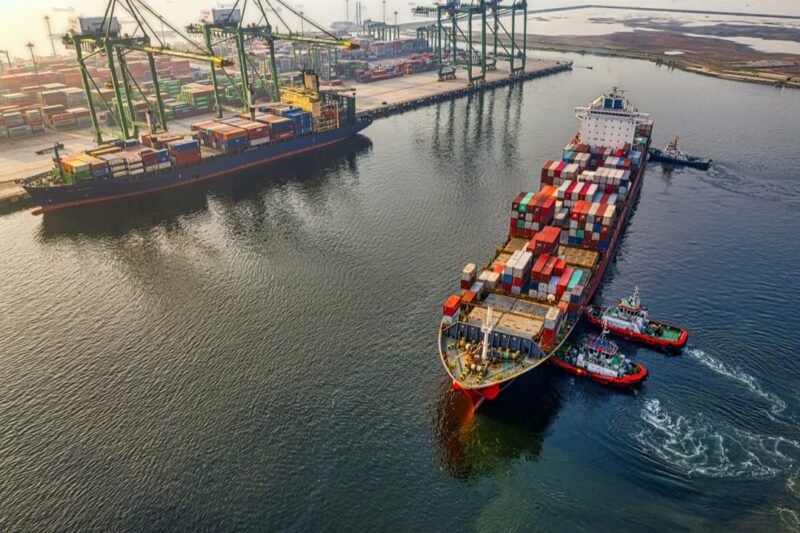
Containerization really took off during World War II.
The countries involved needed a way to quickly and efficiently move supplies around the world. Prior to containerization, most transportation systems relied on disjoined “break bulk cargo” systems, which required a lot of manual labor. Goods would arrive at ports and be stored in warehouses until dock workers packaged them for transport (be that via ocean, train, or other means). Once the goods arrived at their destination, more dock workers would unpack them and repack them again for the next stage of their journey. This process was extremely slow compared to our modern systems, and required hands-on manual labor that was at times quite dangerous. Not to mention theft was also common as it would be easy to lose track amongst the large number and variety of containers. Containerization began to hit its stride in the 1950’s when an entrepreneur named Malcom McLean wondered how he could more quickly transfer goods from his trucks onto cargo ships. He worked with an engineer named Keith Tantlinger to create the first shipping container and ‘Ideal X’, a WWII tanker ship, was repurposed into the first container ship. This first ship was able to carry 58 containers. In the 80’s and 90’s container shipping grew, as well as the ships that carried them and ships would be rated by how many TEUs (Or Twenty Foot Equivalent Units) they could hold. Many ships are so large they can hold up to 15,000 TEUs! It’s currently estimated that at least 1,000 ships pass through the straits of Gibraltar every day!
Intermodal Containers
The phrase “shipping container” is actually a very broad term, it can apply to any packaging used for shipping. The large 20 foot or 40 foot long steel boxes that normally come to mind are actually called “intermodal containers”. The name comes from the fact that the same containers can be used in many different modes of transportation; they may be hauled by a truck, loaded onto a freight train, and then onto a ship, all without having to unload the contents of the container. This is perhaps the most crucial aspect that makes intermodal containers such an effective system for transporting goods. This multi-modal process of moving goods is called “containerization”, centered around the standardized intermodal container and all of the equipment used to load, store and transport the containers. These containers can also be locked or sealed to protect their valuable contents from theft or damage.
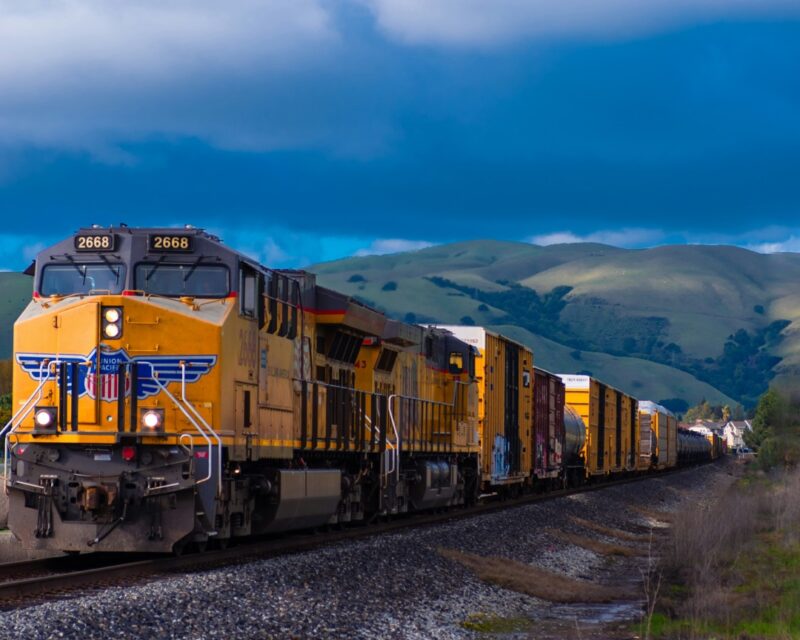
While containerization has revolutionized international trade and commerce, like anything it isn’t a perfect system. As world commerce increases ships are becoming larger, which means more crowding at ports. Crowded ports can mean ships sometimes have to wait days or weeks to be unloaded, which can cause issues if they contain perishable cargo like produce. While shipping typically runs like a well oiled machine, occasionally things can still go wrong, and sometimes it just takes one mistake to really upend the system, such as when the Ever Given ship was stuck in the Suez Canal in 2021 and suddenly the already stressed supply chain was backed up further. While many procedures and systems are in place to prevent containers from “wandering off”, the truth is humans are humans and containers can still get switched or lost from time to time, and thieves will still thieve. These incidents are rare given how many containers are shipped every day, but they’re still a possibility.
The Future of Container Shipping
While the first 50 years of modern containerization saw rapid growth across the industry, experts expect that the next 50 years may see a slower growth dependent on a number of factors. It’s predicted that container ships could continue to grow in size from the current average of 10,000 TEUs to a maximum of 50,000 TEUs by 2067! But while containers and ships may continue to expand, experts realize this kind of growth will be based on a number of factors, from cost of fuel, to world economy trends. They also acknowledge that growth can be limited by factors such as the width and depth of existing waterways worldwide as well as the limits of existing equipment used at ports for loading and unloading containers. It will take decades to implement significant changes due to the high cost of doing so at such a global scale. At this time though experts believe that “peak containerization,” is still a long way off, and we’ll continue to see innovations in how we move goods around the globe.
