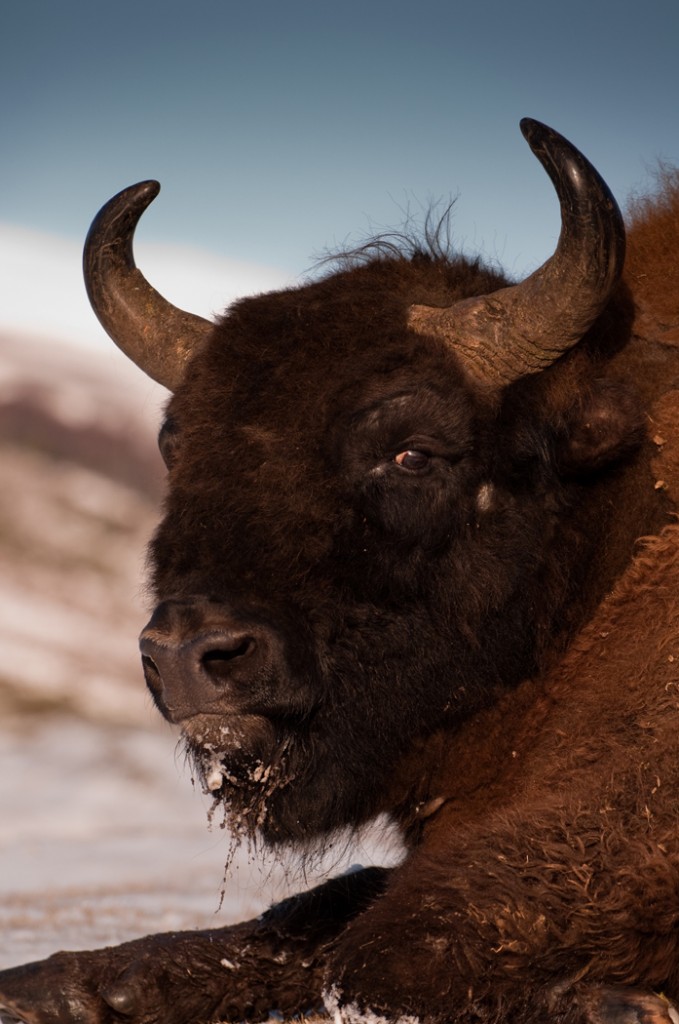
When it comes dinner in America, it's difficult to imagine what meals would look like without cows. The prolific bovine, technically an invasive species in North America, has been our go-to source of meat and dairy products for generations. However, it turns out that cows are a relatively recent introduction to the American landscape. The original big bovine of the North American landscape was the
American Bison. After being almost completely wiped out by the 20th century, today Bison populations are beginning to grow as consumers and chef's alike realize the potential value of Bison meat. Read on for more information about this history of Bison in America, and to learn why you might be eating them sooner than you think.
American Bison are absolutely huge animals. One subspecies is the largest extant mammal on land in North America. They can grow to be about 11 feet long, over 5 feet tall, and, in the wild, the larger males can weigh up to
2800 pounds. In captivity and on commercial farms, adult male bison have been known to grow to just over
3800 pounds! Couple that with bisons' ability to run up to
40MPH, and you have a very serious animal on your hands. Bison are herbivores, and spend the vast majority of their time either grazing, or looking for somewhere new to graze. Typically, their
preferred habitats are open or semi-open grasslands and plains, river valleys as well as prairies.
The American Bison used to roam the nation, uninhibited, with some estimates pegging the population at over
30 million at the time that European settlers arrived. The herds were a major source of food and resources for Native Americans, not to mention a large part of their spiritual culture. Once European settlers arrived on the continent, the Bison populations quickly became endangered. A combination of overhunting, as well as disease from imported cows nearly made the Bison extinct, with some estimates saying there were fewer than
1,000 Bison on the continent by 1890. Though some attempts were made to domesticate Bison and use them for farming, they have
volatile temperament and are not friendly. Bison are known to be easily provoked and will charge if they feel threatened.
Today, Bison populations are increasing, with some wild herds in preserved land throughout Mexico, the United States and Canada. The big news is that the commercial bison industry is growing, as demand for meat increases, and for good reason. As the
National Bison Association notes, Bison meat actually contains high levels of protein and iron, and low levels of fat and calories, when compared with beef and other popular meats. Additionally,
regulations prohibit the use of growth hormones in Bison, and antibiotics are only administered when necessary to cure illness. Best of all, because Bison are actually native to North America, they require
no artificial shelters, can withstand more extreme weather than cows, and they generally do not require any human intervention to reproduce healthily.
We recently noted that it may become increasingly common to see
insects adopted as sources of protein and nutrients. We wouldn't be surpassed if your favorite fast food restaurant starts featuring a bison burger in the coming years. For chefs and restauranteurs who have yet to try adding a bison dish to their menu, we recommend giving it a try now, before this trend hits full swing. You can plan a
prix fix menu evening (click to check out our blog post for tips organizing your event) to test out the new dishes, to generate some buzz around your new menu options.
Source:
Wikipedia,
National Bison Association,
Image Credit,
Bison Documentary
 Tablebases.com
