Awhile ago, we wrote about the benefits of having a
guest wifi network available for your customers, and shortly before that, we asked whether or not hospitality businesses should provide means for customers to
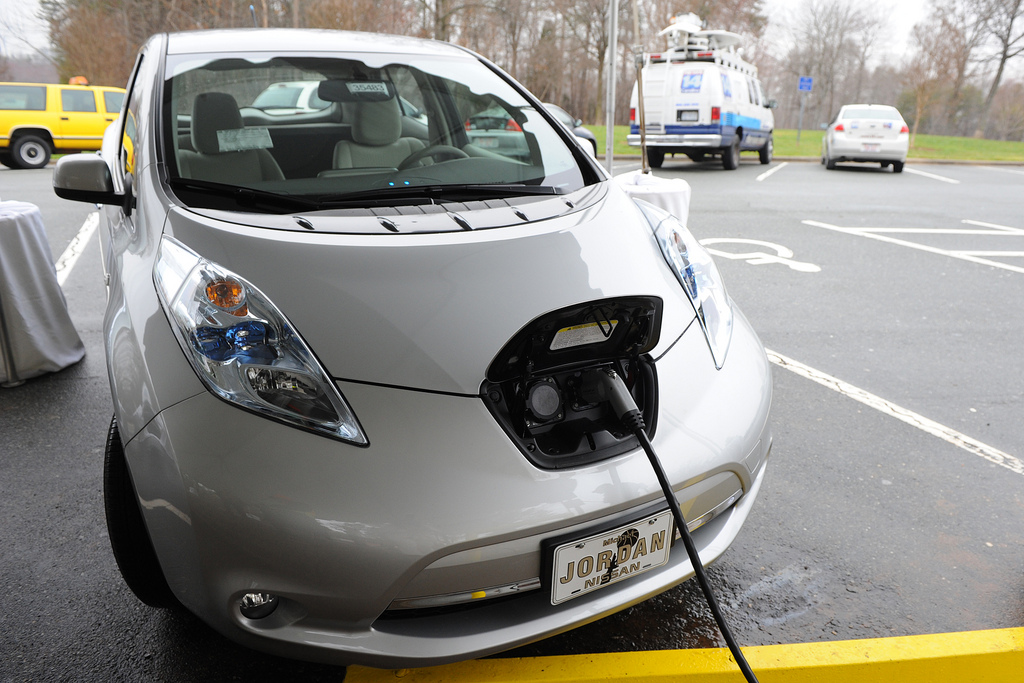
charge their phones (short answer: you probably should). Another piece of technology that is rapidly changing is personal transport. While electric cars are still uncommon in most parts of the U.S. (the exception being the west coast, especially metropolitan areas, where they are a fairly common sight), it's pretty clear that electric cars, in one form or another, are the future of personal transportation. So, should your business offer an electric vehicle charging station? Let's take a look at the pros and cons, and see how hospitality businesses specifically can benefit by staying ahead of the tech curve.
The Pros:
Tax Credit: This positive point really depends on your state and local policies regarding electric vehicles. Some states, such as California, provide
substantial tax credits to those who purchase EVs, plug-in hybrids or install public charging stations. As the Sierra Club reports, a brewery owner in New Hampshire
received a $3,000 rebate from their utility provider, to help cover the cost and installation of an electric charge point.
Cost: It may seem strange to have cost be in the "pros" section, but there are options that are very cost effective for business owners. Instead of purchasing a charge point and covering the installation and maintenance costs, owners can basically "lease" a parking space to an
EVSE (electric vehicle supply equipment provider), who will provide, install and maintain the charge point, and share the profits with the business owner. The downside to this method is that your customers are charged for using the station, and since many charging stations are still free, they may pass up your option for a cheaper or free alternative nearby, and you may lose some of that potential increase in traffic. Still, for business owners on a tight budget, this can be a great option that requires a lot less investment.
Environmentalism: By installing an electric vehicle charger at your business, you're helping to get more people into efficient electric vehicles, which means less people using gas powered cars. Two of the biggest hurdles for consumers to overcome when considering an electric vehicle are the increased upfront cost, and
electric range. Most affordable electric cars top out at between 60-100 miles of range. Stopping for gas takes a lot less time than fully charging an electric vehicle, and you don't have to do it as often. More charging points means more infrastructure for electric cars, and more opportunities for customers to charge up, which can help increase their adoption rate. If you're the type who feels good about helping the planet, this reason in-and-of itself can be a big motivator to install a charging station.
Image: Even if you are not a tree-hugger at heart, environmentalism is popular. More and more, consumers expect businesses to take a stand on controversial issues (see
Chipotle's GMO free menu for an example). Having an electric charging point can help bolster your businesses reputation as an environmentally sensitive organization, and improve your image.
Increased Traffic: While the number of charging points for electric cars is growing every day, they are still not a common site. There are a variety of smartphone apps and services that help consumers find EV charing stations. Your business could see an increase in new traffic as consumers find you on maps of charging points. Not only that, but plugging an EV in for 10 minutes is hardly worth it, so you may find your customers linger longer and spend more money while they top-up their car's batteries. To top it off, market research has shown that most electric car buyers are rather affluent, making over
$100,00 per year.
The cons:
Cost: This one is obvious, but
not installing electric charging stations is, at the outset, obviously cheaper than opting to install those stations. Initial costs for a charging station can run anywhere from $2,500 to $6000 if you're buying the equipment, rather than working with an EVSE, and that may or may not include installation, depending on your local electric infrastructure and the options available in your area. The upside to buying your own unit outright, is that you can set the prices for charging, or even offer it for free to customers, which means you may draw EV drivers who passed up another charging station in order to use your free unit. Whether or not increased business will help offset those costs is up in the air, and really depends on your area, customer base, and type of business.
Coffee shops, and other businesses with quick turnover rates (lots of customers in and out quickly) likely wouldn't see a huge increase in business, as most customers don't stay long enough to charge a car while they enjoy their beverage. Bars are another questionable place for electric car charging stations, as you don't exactly want to encourage those customers to drive. A sit-down restaurant on the other hand, could benefit greatly, as customers regularly spend a good amount of time in those businesses, and could charge their car while they enjoy a meal. Hotels, too, are obvious examples where a charging station makes perfect sense.
Another factor to think about is the cost of your electricity. Currently, most public chargers are free for consumers to use, meaning you're covering the cost of electricity for your customers, although these costs are fairly low, and there are some alternatives, such as partnering with a
charging network. Pasquale Romano, CEO of ChargePoint notes that
"People can expect some amount of free charging in retail—the cost is negligible compared with the goodwill and customer loyalty retailers can engender". You'll have to decide if the potential increase in traffic is worth the initial and ongoing costs of operating a charging station.
If you're coming at this from an environmental perspective, you may also want to look into how your local electricity is generated. Most agree that regardless of the source of electricity, EV's are still more efficient than gas powered automobiles. Still, if you have qualms about pushing coal, gas or nuclear derived electrons into your customers cars, you'll also need to consider investing in a clean solar power system to generate electricity for the chargers.
Tech Standards: While there are standards for electric car charging (can you imagine each manufacturer having a
different charing port?), technology advances at a very rapid pace. There is no way to know for certain what types of changes in battery technology may occur, and if or when that will mean upgrading your charging station. Purchasing a new smartphone every one or two years is one thing, having to frequently replace or upgrade a multi-thousand dollar piece of equipment could be a big burden on business owners. Owners of Apple's iPhones faced this dilemma a few years ago, albeit on a small scale, when the company abruptly switched to a n
ew type of charging port. Also, with automobile manufacturers testing
hydrogen fuel cell cars, these chargers may well be obsolete before EV's are even completely adopted by consumers.
One way to get around this problem is by partnering with an EVSE, as mentioned in the "pros" section above. That way, the EVSE owns and maintains the equipment, so you don't have to worry about updating hardware as technology advances.
The Bottom Line: Ultimately, if you run a hospitality business, we think it's a good idea to invest in at least one or two electric charging stations. With momentum comes change, so more available charging stations means more incentive for consumers to buy electric cars, and therefore more people needing to use your charger. For sit-down restaurants, hotels, B&Bs and other similar businesses where consumers spend a good amount of time, installing an electric vehicle charger (especially now, while they are still fairly uncommon) can be a
competitive advantage and draw more customers to your business. Especially given the option to partner with a company that will install and maintain the charge point at no cost to you, this one is a no brainer; let's jump into the future.
For more info about which type of charger to install, check out
this excellent article from PlugInCars.com.
Sources:
CNBC,
Sierra Club,
PlugInCars
Image Credit:
Flickr Tablebases.com
