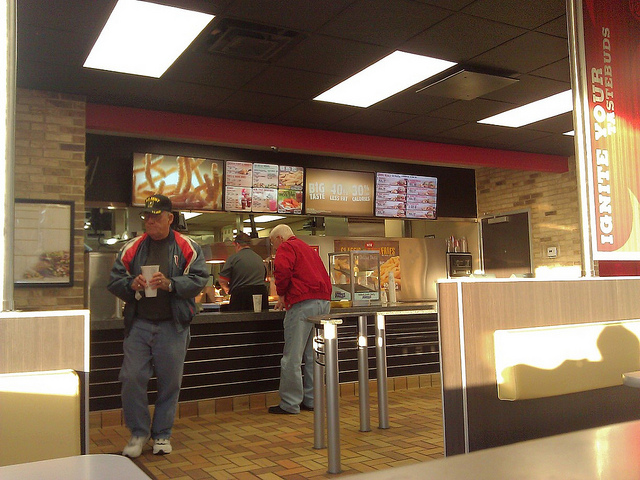
Restaurant technology has taken huge leaps and bounds recently, with smartphones, computers and internet connected services changing not only the way that restaurants are managed, but also the ways in which consumers interact with hospitality-industry businesses. From order-ahead smartphones apps, to 3rd party delivery services, customers are increasingly using technology as a liaison between themselves and restaurants. One of the latest restaurant technology trends is starting to look like it will be here for the long haul: digital menu boards. While they may not be a good fit for all restaurants, digital signage is proving to be a valuable, dynamic, and efficient way for restaurants to engage with consumers and keep their experience streamlined.
The main advantage that digital signage carriers over traditional, static menu boards is the ability to change digital menus quickly. A few simple operations on a computer can take you from breakfast to lunch, or from daily menus to holiday specials. Not only is this faster than having to manually change physical menus, but over time it can also cut down on material costs (vs paper menus and signage), and makes it easier for a restaurant to continuously update their offerings, keeping things fresh and competitive.
Another advantage to digital menu boards is staying in compliance with food industry regulations. With menu labeling changes set to take effect in December of 2016, many restaurants and food businesses will be required to post calorie information alongside all menu items. Digital signs will make it easy to add this information quickly, and will also facilitate updating the information should your recipes or menu items change in the future.
Digital signs also open up the door for interactivity with guests. Imagine a large touch screen that shows an interactive menu, where guests can explore menu options and see nutrition information, and any potential allergens. This not only makes things more efficient, by allowing guests to find the information on their own (and in a format with which they are likely already comfortable), it is also safer, as there is no guessing as to wether or not, for example, walnuts are included on the side salad.
While fast-food and casual restaurants are probably best served by digital signage, even higher-end restaurants that aim to keep their paper menus can reap benefits from digital signs. A good example is a digital wait list, showing the name of a party and the approximate time until they can be seated.
There are a whole host of other great uses for digital signs, and their flexibility means that, much like smartphones, their useful ness is likely to grow substantially as more businesses adopt the technology. Restauranteurs, what do you think about digital signs? Has your business already gone full tech crazy, or are you holding out to see where this trend goes? Let us know what you think via Google+, Twitter and Facebook!
 Tablebases.com
