The Obama administration and
FDA have just made
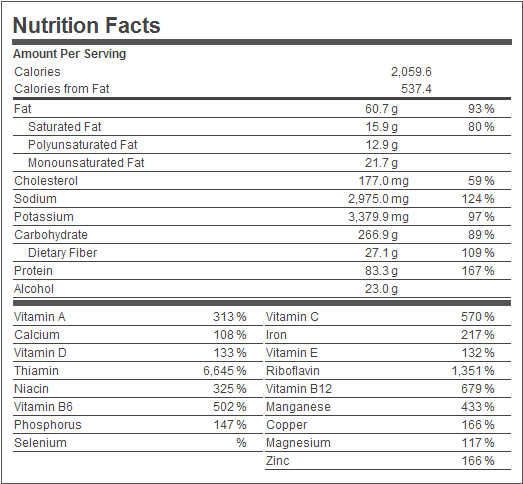
sweeping changes to the way food nutrition labels are organized, with the goal of making them more useful and straightforward for consumers. There are quite a few changes on the table, including bolder and larger type face for calorie counts, as well as potentially reorganized categories aimed at helping consumers make quick and informed decisions at the grocery store. This will mark the
largest significant change in American food labeling since their advent 2 decades prior. The proposed effects will not go into effect right away, the FDA will hear comments and concerns for
90 days, and then will likely give companies two years or so to adapt to the changes.
The most notable visual change in the labels will be a shift away from highlighting fats, i
n favor of calories. Calorie counts will now be displayed at the top of the labels in bolt, large type. Other possibilities include changing the label format to include simple categories, such as "quick faces" for fat and carbohydrate counts, and "avoid too much" for sodium and added sugars. In the "get enough" category, vitamins and minerals are listed as usual, with the addition of potassium and Vitamin D. Labeling of Vitamin A and C will no longer be required with the new label system.
There are some other major changes occurring as well, all with the aim of better informing consumers. The most notable will be the modification of serving sizes, which will
now more accurately represent a typical serving for Americans. A single serving of ice cream, for instance, will now be considered one cup instead of half a cup. For soda, any 12 ounce and 20 ounce bottles will be considered a
single serving, and the same goes for individually packaged items such as chip bags and frozen meals. The goal is to have the labels reflect actual consumption, rather than ideal consumption.
Another large change concerns added sugars. Current food labels do require that companies include how many grams of sugar per serving a food contains, but the updated labels will also require companies to distinguish between naturally occurring sugars, and those that have been added. The argument here is that while added sugars are essentially useless calories, natural sweetness usually brings with it other nutritional benefits. A former FDA Commisioner commented, saying that
he hopes the changes will persuade companies to remove extra added sugars and unhealthy ingredients, since they can no longer label a bottle as two servings to lower the printed calorie amounts.
What do you think about the new labeling requirements, are they helpful to consumers, or too strict on food companies?
Source:
FDA, Huffington Post, Image Credit (FDA)
 Tablebases.com
