Not too long ago, we talked about the
environmental impact of coffee, from it's inception on the farm to the drink in your local café. Now,
CNN has reported on another controversial internationally traded food item, cocoa. Much like coffee, the demand for high quality cocoa is predicted to increase dramatically. Also like coffee, those who grow cocoa beans and those who consume them are groups
separated by an ocean of disparities, quite literally. The vast majority of the world's supply of cocoa comes from very poor communities in West Africa, Indonesia, and South American nations such as Brazil and Ecuador. Of them, more than 1/3rd of the global cocoa bean supply, thats approximately 1511 thousand tonnes per year, originates from a small west African nation,
Côte d'Ivoire, otherwise known as the Ivory Coast.
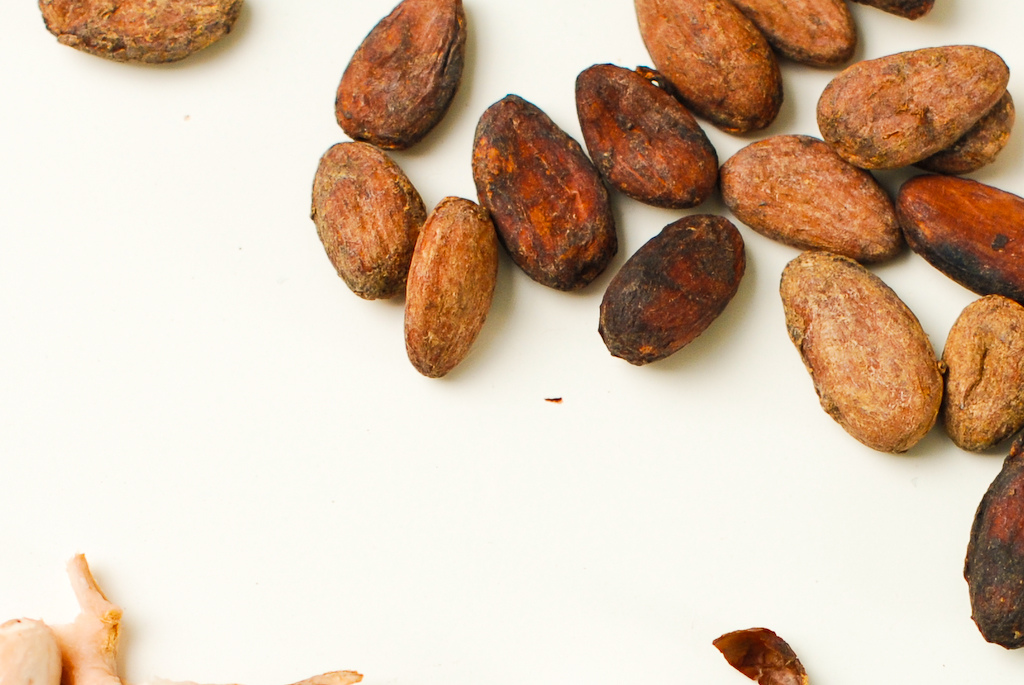
Cocoa is a long utilized food source, which grows as a bean in pods directly on the trunks of cocoa trees. It is thought to have originated somewhere near present day Venezuela, where it was utilized by
natives as far back as the year 1500 B.C.E. Each tree produces between 20 and 30 pods per year, with each pod containing up to 50 cocoa beans. That's about
500 grams per tree, per year. With the amount of cocoa produced by just the Côte d'Ivoire each year, you can see that the industry is comprised of a huge amount of land, trees and farm workers. Part of the reason why the production of cocoa is relegated to concentrated regions is because of the plants environmental requirements. It will generally only grow within
20 degrees north or south of the equator, making West Africa a prime farming location.
The chocolate industry is absolutely enormous, worth an estimated
$110 Billion per year. While that sounds like plenty to go around, according to CNN, only about 3% of that total goes to the cocoa farmers.
A handy infographic shows that a further 5% of that total goes to the cocoa buyer/distributor, including local taxes, 12% to the transportation and storage of beans, 20% goes to production of chocolate, with 7% going to the grinding and processing, and 10% to marketing efforts. A whopping 43% of that $110 Billion accounts for retail and supermarket margins.
Most of the chocolate distributed around the world ends up in the hands of wealthier consumers in America and Western Europe (wealthy as compared to the farmers who produce the crop).
764 thousand metric tonnes of cocoa are consumed each year by the United States, a nation which produces essentially no cocoa. With demand for chocolate growing rapidly, some experts have predicted we will run out of affordable cocoa supplies in as little as 20 years.
This predicted rise in cost has some big names, such as Nestlé, very worried. Add to that the fact that cocoa farmers have been receiving increasing media attention because of the low rates paid for beans, as well the widespread use of child labor, and some large corporations are starting to make strides towards more sustainable cocoa farming practices. Some efforts include supplying farmers with high quality saplings, as well as setting up small agricultural schools to teach sustainability practices (including avoiding child labor).
As CNN points out, the solutions to promoting sustainable farming practices and improving conditions for cocoa farmers lies in the hands of consumers. Products that are
certified fair trade (as we've discussed in a previous post) actually do provide increased profits for farmers, as well as help to set up services in their local communities. Increased consumer demand for responsibly produced goods translates into corporations putting more time and money into sustainable sources.
Does your restaurant or business utilize a large amount of chocolate? Are you purchasing fair trade, or considering making the switch? Let us know what you think via Facebook, LinkedIn, Google + and Twitter.
Source:
CNN,
Image Credit (Flickr: Everjean)
 Tablebases.com
