
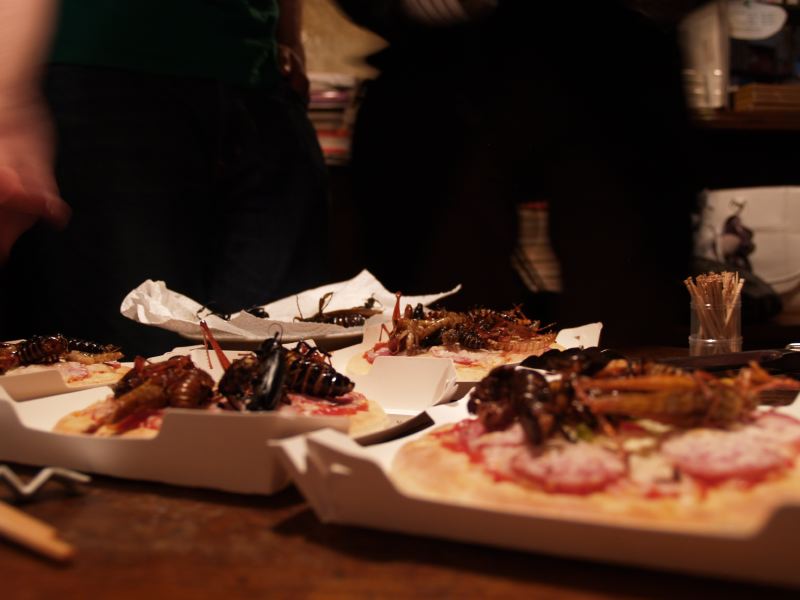
As more and more consumers turn their attention towards the environmental sustainability of our food industry, a symbolic deadline is drawing near. In 2050, when the global population is expected to exceed 9 billion, estimates say we will need to produce double the amount of food that we do today. That is a tall order, layered with challenges, such as climate change, which has already begun to stress agricultural industries around the world. A recent article in The Guardian takes a look at often pondered idea (one that we also covered a few months ago), the consumption of insects. The challenge, however, is to change the ways in which western nations think about bugs. In order for insects to become a viable source of protein, and a staple on the menus of our favorite restaurants, they first need to be glamorized.
As the Guardian reminds us, insects are one of the most sustainable forms of proteins to consume. They take minimal resources (compared to other meats) to produce, and can be prepared in a number of varied ways. Unfortunately, many cultures, especially in western nations, view insects as creepy and disgusting, not as something you could enjoy eating. So does the fate of the world's agriculture rest in the hands of talented, high-end chefs? Maybe the momentum we need is just a tasting menu away...
Bugs are gross. At least here in the US, we have developed countless ways to rid our lives of insects. Between doors, windows, pesticides, rubber seals, fly paper and exterminators, there are hundreds of pieces of our daily lives that have been developed to keep us feeling "clean". In many cultures, insects are not feared, but sought after, as they comprise a major part of certain local, *gulp*, diets! Yes, people eat bugs! Depending on where you go, who is in charge of the cuisine, and the methods of preparation used, entomophagy (insect eating) can actually be an extremely nutritious part of your diet. A recent BBC article points out that in France and Australia, the latest haute trend hitting high-end restaurant tables is insect based dishes, appearing on the menus of some of the nations' leading restaurants. While this may be an exotic and fun trend (on the heels of Norway's increasing presence in European cuisine, the French may be looking for their next big hit), this also marks an important time, as food shortages and concerns over the environment may leave us looking for a new source of animal protein sooner rather than later. So why would we even eat insects, when traditional meats such as beef, pork and chicken are so delicious? Well in reality, raising livestock, especially cattle, is extremely resource intensive. The feed, water and land necessary for livestock production pose a real threat to the environment and the security of our future food supplies. For example, to grow one pound of beef, it takes approximately 1,799 gallons of water (according to National Geographic). As the BBC reports, the demand for animal protein is predicted to double by the year 2050, and we are already seeing increasing beef prices as the industry reaches full capacity. According to the Food and Agriculture Organization of the United Nations (FAO), insect farming requires up to 12 times less feed than cattle farming, four times less than for raising sheep, and half as much as is required for chicken and pigs. All that feed requires land, water and energy to produce, making it an extremely inefficient use of resources compared to raising bugs. Another reason why "micro-livestock" are a perfect alternative to the animal proteins we are accustomed to, is because they are highly nutritious. Studies have found that the nutrient value varies greatly depending on the species of insect, as well as the method of preparation. However, the research completed so far by the FAO and other organizations show that insects are actually a very good source of protein, as well as minerals such as iron, calcium and zinc. The nutrient dense nature of insects, along with the comparatively minimal required resources, also means that global production could result in an inexpensive and healthy protein option for those in demographics and countries with limited access to more expensive animal proteins such as beef. While that may paint a pretty picture for the future of entomophagy, there are some major obstacles that must be overcome before crickets and weevils become staples in your local supermarket. While true that most research efforts show results that favor insect consumption, there are still challenges to overcome. As a French official quoted by BBC says, "Commercializing insects for human consumption is not authorized but tolerated", and the same is true of many nations where the practice is currently uncommon. Additionally, the article notes that producing these insects on a very large scale has proven technologically and economically challenging. The final hurdle in bringing insects to the dining table is convincing people that eating insects does not necessarily mean slurping slimy worms, and can make for delicious meals. That may prove to be the largest challenge of all in this global endeavor! Source: BBC, FAO, National Geographic, The Guardian
