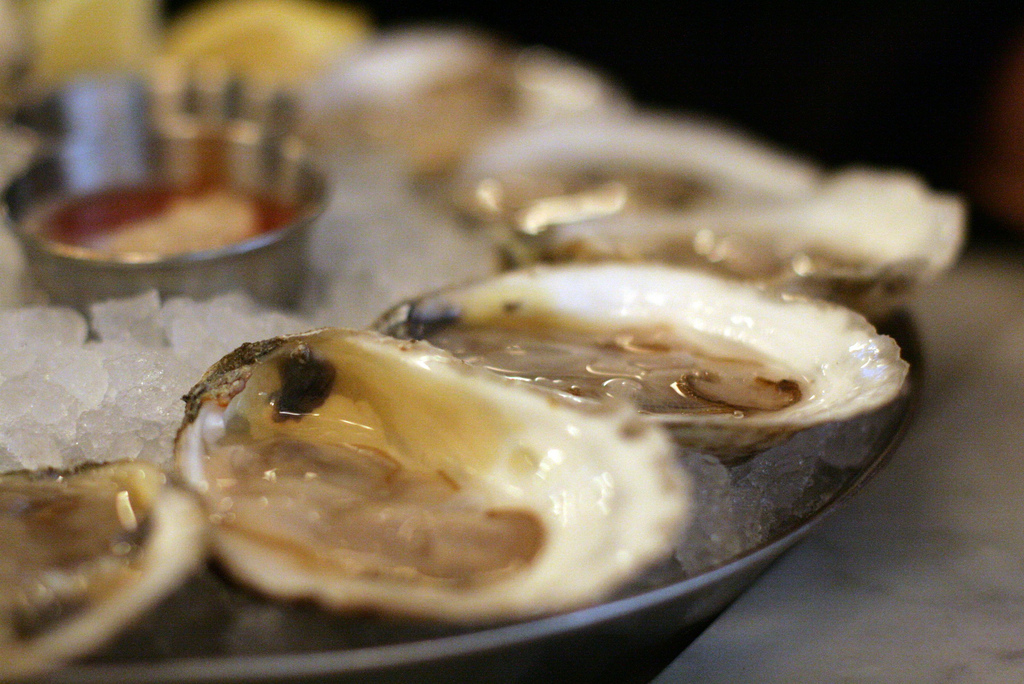
Oysters are a well known delicacy, and are a staple on restaurant menus, ranging from ultra-high-end establishments, down to mom and pop fish shops. Over the years, however, America's ever growing taste for the ocean treasure, along with environmental factors, has steadily increased to the point that the natural oyster populations in the United States have plummeted. Luckily, as an article from
Nation's Restaurant News points out, the practice of aquaculture, ocean farming, is booming when it comes to oysters, as 95% of those consumed globally now come from farms.
These oyster farms are actually good for the environment, restaurants and in some ways, for consumers as well. While farming tended to carry with it a bad reputation in 2013, with concepts such as "free-range", "local" and "non-GMO" constantly prodding the industry, oyster farming is a completely different practice. Oysters act as little filters, that remove excess nutrients from the water, and can actually help to improve the water quality. That is a very good side effect in our industrial world, as the article notes, because oyster production at these farms has nearly doubled over the last decade. Part of that is because of the declining population of oysters that can be "wild-caught", as well as our increased interested in eating the shelled creatures. Notable for restauranteurs, farm raised oysters are, generally, larger and of higher quality than wild caught oysters.
So what is the catch? Well as NRN point out, farmed oysters actually cost about 20% more than the wild caught variety, an expense that gets passed onto consumers at restaurant tables and grocery stores. Fortunately, improvements in quality, and the practice's sustainability, seem to be making it all worthwhile. Check out the source link below for the full article from NRN.
Source:
Nation's Restaurant News,
Image Credit: Flickr Tablebases.com
