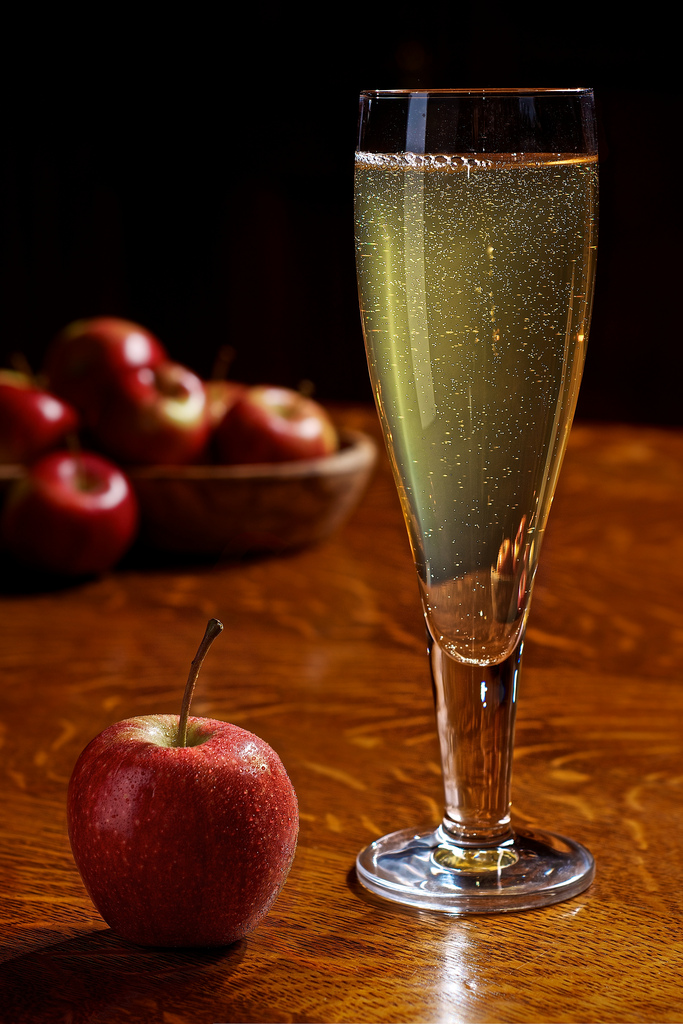
America is experiencing a strong cider revival, as
Nations Restaurant News reports. The cider industry has experienced a sharp rise in sales over the last two years. The fruit derived beverage, previously very popular on our shores, has been ubiquitous in Europe and other parts of the world for centuries. For the last 100 years or so, American's have shown little interest. However, in the wake of an insurgence of craft-brewing and local fare, cider is regaining traction.
Previously one of the most popular beverages in America, a combination of factors brought the industry to a standstill during the infancy of the 20th century. Food website
Serious Eats notes that when the first wave of European immigrants came to North America, they almost immediately
began cultivating cider apple orchards, as barley and other grains necessary for the production of beer were too difficult to grow properly on the east coast. By the end of the 19th century, it was not uncommon for homes to have small cider apple orchards on the property. However, as American populations moved west into areas that were more suitable for the growing of barley and hops, and with a new wave of European immigrants bringing their techniques for beer production, Americans lost their taste for cider. The nail in the coffin was prohibition, which made the production and consumption of "hard cider" illegal. Cider apples are not the same as the apples we use to eat and cook with, as they are much more tannic and acidic. The huge system of orchards throughout the country was burned and converted to more edible varietals so that farmers could continue to have a product to sell. Even after prohibition, because of the lack of cider trees and America's changing tastes, production never returned to its previously normal levels. The mass produced ciders that appeared afterwards were generally very sweet, and made with poorer quality ingredients.
Now that the current generations of America are being introduced to high-quality ciders, restauranteurs are seeing the wealth of opportunities for bar sales. Besides the fact that cider is naturally gluten free,
NRN notes that the wide variety of textures, nuanced flavors, and levels of carbonation available means that different ciders pair very well with food, and can appeal to wine and beer drinkers who may be looking for something new to try. Cider is a large part of the history of many countries throughout the globe, and it looks like America is set to continue the tradition. To the restauranteurs and bar owners of the nation, get ready to add some high quality ciders to your drinks menu!
Sources:
SeriousEats,
Nations Restaurant News.
 Tablebases.com
